Are you ready to lay down some tracks as a group?
Unless you have your own home setup, you’ll want to most of the time and money you spend in a studio. Find out how to record a song as a band and create the best tracks possible. This will put you ahead when pitching to labels or releasing new music.
Recording together as a band is one of the most rewards things you can do as a musician. However, if you don’t know how to record, it can be a stressful process. Read on for the lowdown on getting greatest results.
How to record a song as a band
No two studios, tracks, engineers or producers are the same. Each and every session is different, presenting its own set of unique challenges. It’s crucial that you start the process knowing what to expect and how you’ll achieve the desired results.
Before you even set foot in the studio, you should create a schedule. No matter how long you’re recording for, a recording studio session plan will make a world of difference.
Break the day up into several sections, 2-3 hours at a time and then begin dissecting your songs into manageable chunks. You may want to lay down a guide track as a live unit. After this, break off and record individual parts over the top. Very often, engineers will want to get the drums laid down first. They can be the trickiest to get right and are the absolute bedrock of most songs. You can then have chunks of time devoted to bass, guitars, keys, strings – whatever fills up the main body of the tune.
What should I record first when recording a song?
For most songs, you will first lay down a guide track. This is the most basic version of the song which you will then use to play along to later. Begin with the melody instruments first – the ones which are the most dominant. This is likely to be guitar or keys.
The next job will be to lay down the drums. This forms the backbone of the song and contributes a great deal to the ‘feel’ of the recording.
Next, the bass, guitars, keys, synths, strings and other instrument parts will be laid down to fill the main body of the tune. If you’re short on time and depending on the number of instruments you have, you may need to record the drums and bass together as one track.
After these, comes the vocals. The main vocal and double-tracking take will be recorded, followed by any backing and harmony vocals. Vocals are usually recorded last, once the rest of the band has done their bit.
Finally, any percussion and additional parts will be added.
So, if you have a single day to record a track, say 12 hours, you need to plan to fit all of your elements into that time. After you’ve finished your part, comes the editing, mixing and mastering process.
Recording a band live in the studio
It’s tricky to know how long to book your session for. Time is usually either charged by the hour, day, half-day or week. As a band, you’ll need more time than a solo artist would. If you have a lot of instruments, you’ll need to consider how many parts you’ll need to lay down. A good rule of thumb is that, with a full band, it will take a whole day to record the music and at least half a day to get the vocals down too.
Then you’ll need time to mix and master. If you want to be there to make changes to the mix, then you’ll need to allow for that time too. Some bands prefer to mix and master all their tracks together in a separate session at the end of the process.
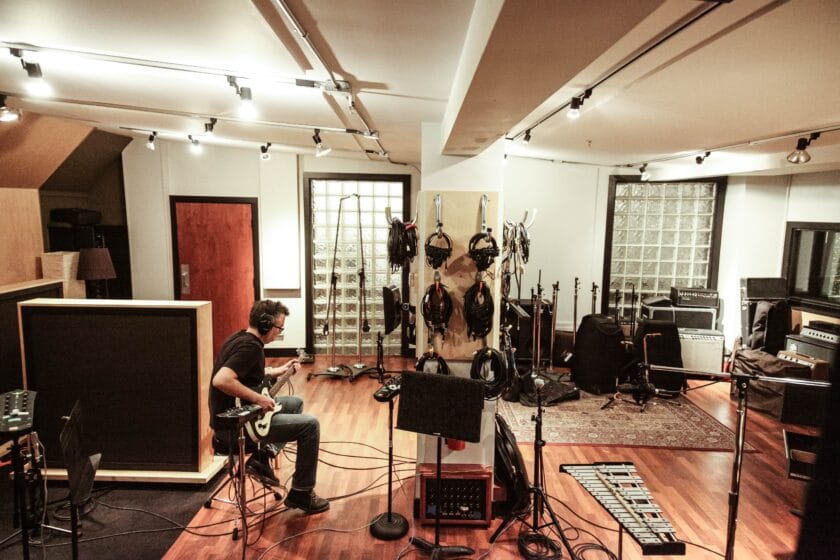
How to record a whole band at once
You should identify the facilities you’ll need to record as a band. It will be different to laying down a track as a solo artist for example. Here are some questions you may want to ask of yourselves and then the studio.
What are the I/O capabilities of the audio interface and what will you need? (You’ll probably need a minimum of 16 inputs to track a rhythm section).
How many mics will you need and what kind (dynamic, condenser, ribbon etc)?
Does the interface have the number of outputs required to create multiple cue mixes?
Will there be a reference vocal available for the instrumentalists?
Don’t worry if you don’t know the answers. Have a chat with the team at the studio, discuss your plans and they’ll be able to identify your needs and decide on a plan.
Recording a band in one room
Some studios will have the capacity to record sections and overdubs in different rooms and booths. Others will have just one space to use. Recording in the same room produces a great sense of camaraderie and atmosphere. However, if you choose to do this, you’ll need an excellent monitoring setup.
A one-room recording will likely be cheaper. However, a benefit you have as a band, is that you split the bill between you. It might take longer to record a band, but head-for-head it’s often cheaper overall. Discuss ahead of time where this money will come from. Perhaps you already have a budget from earnings. Or will it come from your own pockets? If so, is everyone ok with this?
Studio etiquette rules for bands
It’s especially important that bands adhere to studio rules. The more people there are, the more chaos can ensue if you don’t stick to the plan. Here are our top tips for coming away with a good reputation.
- Get there on time – all of you! Consider where you’ll park to offload instruments and amps and allow time to set up drums, tune-up and warm up.
- Don’t touch anything unless you’ve been given permission. The studio is the engineer’s space and they will have a specific way of working. You might think you’re helping, but studios are full of cabling and acoustic sweet spots. Think twice before moving that guitar amp.
- Be respectful. This should go without saying, but don’t put your feet up on the desk. Don’t eat, drink or handle any food around the equipment. Clean up after yourselves and offer to help out where you can.
- Communication is your biggest ally in the studio. Making sure the engineer and backing musicians know exactly what you want to achieve is half the battle. It’s no good listening back after hours of work and not being happy with how you sound.
- Remember that you are there to work. You might be a diva on stage or the next Hendrix on the guitar but your reputation in professional circles is important. Even if just one of you causes issues, the whole band will carry a smear for bad behaviour.
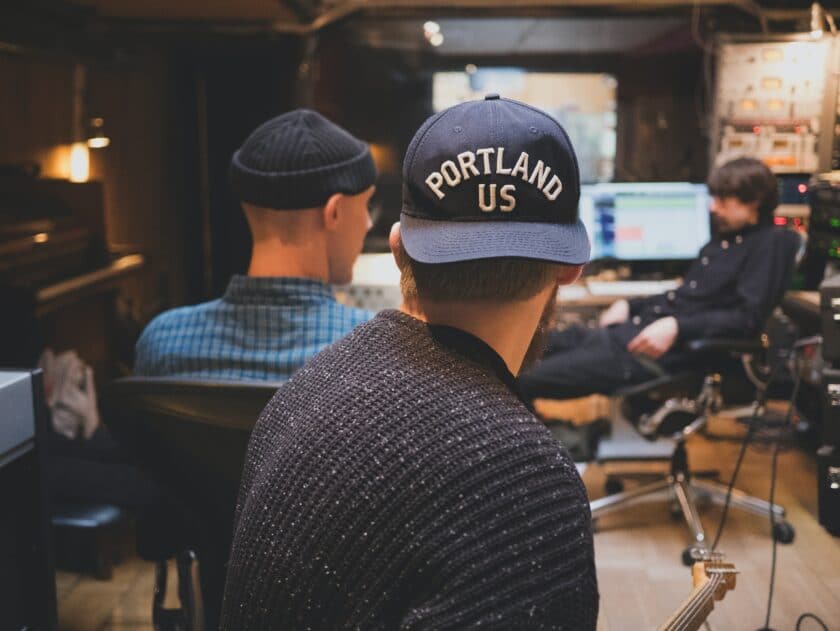
Studios can look like fun and games on Instagram. However, sessions can actually be quite stressful, especially when you miss takes or have to change tack on the fly to get the best recording. This is why time management is very important.
If you want to get the most out of your time, then you need to work really hard. Tricky parts may require dozens of takes so you need to crack on rather than having a break between each take. Recording is magical when things are going well but it can become a long slog if things spiral out of control. Keep yourself energised with some good food and lots of water and remember to stick to your plan.
Related Questions
- How do I record a full band live?
It’s always easier to record in a studio, where you can do retakes and have a balance of mics. However, live recordings can be exciting. Be sure to invest in quality mics and a good mixing desk. Look out for a purpose-designed DAW, such as Ableton Live 10 Suite and hire experienced engineers.
- What do I need to bring with me to the studio?
Bring your instruments and any effects or amplifiers you need to create your sound. Pack some snacks and lunch if you’re going to be there all day. A flask with a closed top lid that won’t spill is useful, along with a big bottle of water (especially for vocalists who need to stay hydrated).
- When are we ready for the recording studio?
When you’re happy that your song is a complete entity that can be performed to the best of your abilities, you’re ready. You should know exactly how to reproduce the song in a studio setting with live or virtual instruments so that an engineer/producer can create a finished track for you.