If you and your band are considering laying down a track, you’ll need to have an idea of the time it might take. Not only so you can plan your schedules, but so you have an estimate of the required budget for recording time in the studio.
So how long does it take a band to record a song in the studio? A ballpark estimate is a day. It really depends on what elements you want to record, whether you’ve prepared fully, how many of you there are and if you’re a purely vocal or instrumental group. It’s worth noting that this does not include editing, mixing and mastering, which are the final steps in finishing your music.
A major factor in how long it takes will be how well you are rehearsed and accordingly whether you have practised with a metronome. In this article, we take an in-depth look at the factors you need to consider and provide a guide for you to calculate the hours, days, or even weeks you may require to achieve your desired result.
How long does it take a band to record a song in a studio?
When you have a winning song that you’d like to lay down, you’re ready to think about how it will translate into a recording. This process is key to understanding how long your song will take to record at the studio.
You have to break your track down into its composite parts. That means knowing exactly which instruments are playing when, where the vocals come in and out and how any harmonies, solos or double-tracking will be used to beef up the vocal parts. With a full understanding of what exactly you want to accomplish, you can be more efficient when you arrive for the very first recording session at the studio.
How to record your music as a band
It’s a good idea to record a demo before you take it to a professional studio. The ideal is if you have a basic set up at home. You could use Bandcamp or Logic to sort out the arrangement, or you can use your mobile phone, room microphone or dictaphone and then listen back to it. This will help you when you begin planning your studio time.
Having the arrangement agreed and all band members well-rehearsed with the song/s is the best way to make the most of the studio time and ultimately save money.
You can then make a much more accurate assessment of the time you will need to book in.. What’s more, when you contact the studio, you can reel off a list of elements you need to achieve. The engineer/producer can give you their professional opinion on how long it’s likely to take. And the more you find out about what’s involved ahead of time (especially the tech side of things), the more prepared you’ll be. Preparation is always a time saver in the studio.
How long does it take to record a song as a band?
You need to think about the following elements when it comes to totting up your estimated studio time:
- How many vocal and instrumental parts are there?
- Is it just a single vocal throughout the track or are there harmonies too
- Is any of the music pre-recorded? If it is, this will drastically reduce your studio time.
- How many instruments dare involved? (For a standard band, you need to think about drums, bass, guitars and keyboards)
There are also some additional time constraints to be considered when recording as a band. For example, you may need to lay down an in-studio guide track (this is in addition to your at-home demo). For this, you record as a group together and then split up to play each instrument separately. Depending on how well rehearsed you are, this can be quite time-consuming. After that, you may want to double-track the vocals and add harmonies and instrumental solos.
The engineer/producer can ensure that everything runs smoother with a full list of your requirements before you begin recording. Each and every studio is different so they won’t all do things the same way. You have to trust their judgement and take their advice when you can.
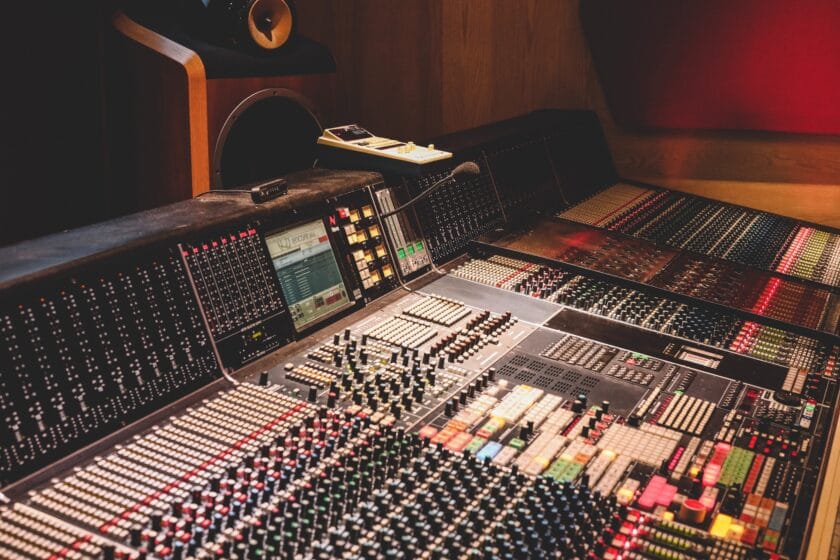
How much studio time do we need?
Most recording sessions involve an 8 or 12 hour day. Unfortunately, while the day will be productive, you won’t be recording for every second of that time. There are loads of other crucial elements to accomplish during the session.
Getting the equipment and instruments set up is time-consuming. However, remember that concentrating on those exact details means that you get a recording that delivers the very best outcome for you as an artist.
It might seem like the engineer is taking their sweet time, but what they are doing is getting the perfect conditions for a great take. There all kinds of considerations that need to be addressed including the microphone choice, vocal booth acoustics, cabling, mixing desk settings, compression, effects and much more.
As a band, you can usually get a song down and mixed in a whole-day studio session, particularly if you’re a vocal-only band. But if you’re starting your recording from scratch with many different people involved, it can be extremely time-consuming. This is especially true if you need to record drums, sample other records and create your own sounds and software instruments. You could need anything from a whole day to a whole week, so consult with the engineer beforehand to get a clear picture.
How long does it take to record an EP?
An EP is an extended single (EP stands for Extended Play). Artists often prefer them for their release because they contain more songs than a single, but fewer than an album.
It offers the opportunity to show a bit more of your creative range and increases your chances of having a hit, without the associated cost of recording 10 or more songs for a full album.
Opting to record an EP can, in the long run, also save you money in the recording studio. As long as you employ the same rigorous planning as you would for a single song, you can take advantage of the studio setup and get lots done quite quickly. With a day being average for a relatively straightforward band recording a song, an EP is likely to take around a week, if you’re organised.
The other great advantage of recording a couple of songs together is that they will have consistent production values having been recorded using the same equipment. You may also find that as a result of an extended period with the engineer/producer, you may get more from them, having developed a better relationship.
Recording studio rates for bands
The time it takes to record a song will have a direct impact on a major factor in the recording planning process – cost. Obviously the longer it takes, the more it costs. And you need to have an idea of the time it’ll take so you can budget accordingly.
Most studios work on an hourly and a day rate. You save some money booking a whole day over a set number of hours. Occasionally, depending on the studio, there are deals for booking multiple days or money-saving seasonal special offers. Alternatively, you could set up a home studio but this will require a lot more money upfront.
How much does it cost to record a song as a band?
Studio costs can range from £30 per hour all the way up to hundreds. If you are travelling larger distances, you may want to find a studio that has accommodation. However, this will add to your costs. Overall, your decision should be based on getting the best you can possibly afford, as well as making sure the studio is equipped to deliver the kind of recording you desire. So it could be anywhere from £300 to record your song, into the thousands. But, you’ll split the costs between the band members.
So while the bigger the band, the longer it’ll take (and so cost more), it’ll also be spread across more people. This can mean it works out cheaper than it would be for a solo artist to lay down a track.
Related Questions
How long does it take to record a rap song?
Rap is generally quicker to record than a band because there’s usually an instrumental track. Expect similar times to a singer. It could be quicker because there are likely fewer harmonies. But with more lyrics, there’s more room for error too. A safe booking would be several hours to a half-day.
How long does it take to release a song?
Once you’ve recorded, you’ll need to have your song edited, mixed and mastered. Again timeframes will vary tremendously depending on the complexity of your track. Once you have the completed song you can release it instantly, yourself on streaming sites and YouTube.